
Condo vs Single Family — What’s Right for You?
Condo vs single family — it’s one of the first big decisions every homebuyer faces. Buying a home is a major milestone — exciting, emotional, and sometimes overwhelming. Whether you’re a first-time buyer, planning to downsize, or exploring real estate as an investment, understanding your options is key.
This isn’t just a question of square footage — it’s about lifestyle, freedom, maintenance, privacy, and long-term value. Your choice between a condo and a single-family home can significantly shape your daily life and future returns.
In this blog, we’ll break down the differences, pros and cons, and common misconceptions between these two property types — all in plain, practical language — so you can make a confident, informed decision that fits your goals.
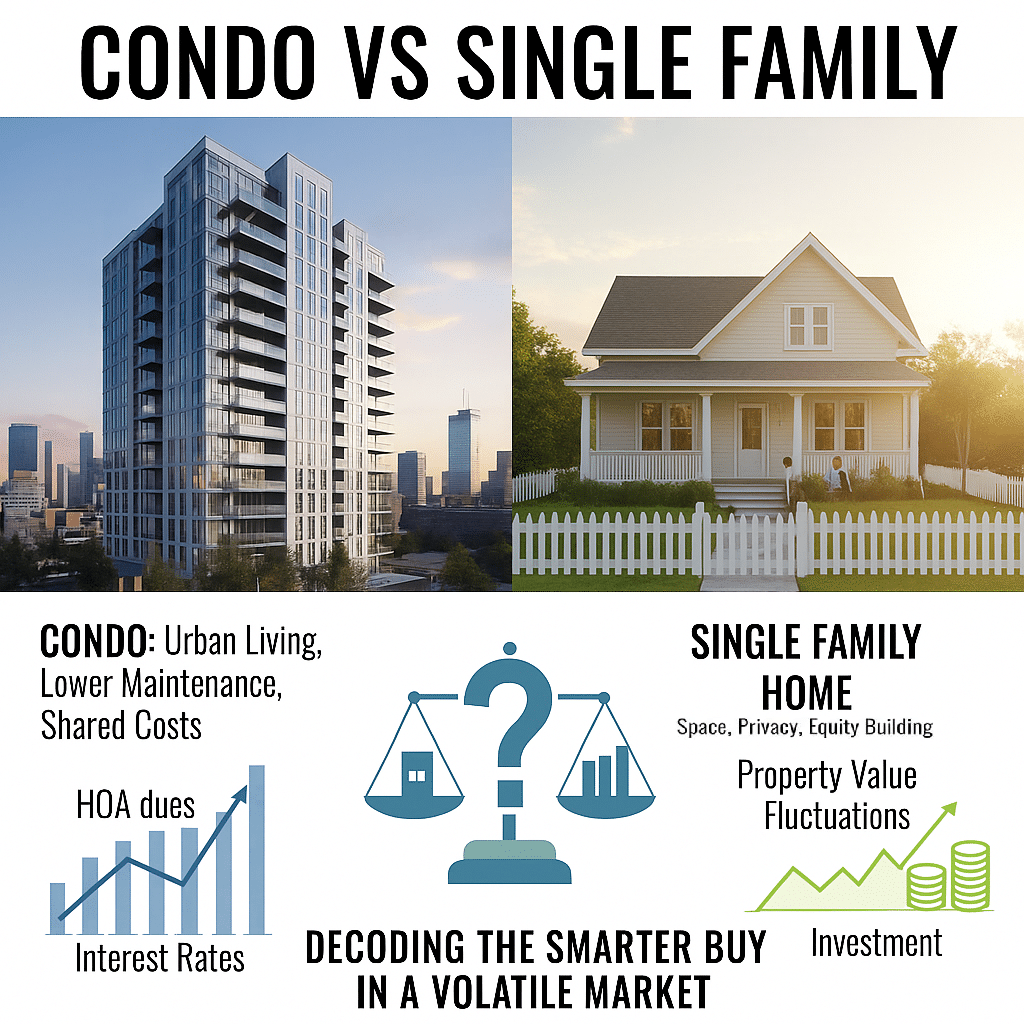
? Condo (Condominium)
In short, a condo (condominium) is a unit you own within a larger building or complex. You fully own the interior of your unit, while the shared spaces — like the roof, lobby, hallways, and parking — are jointly owned and maintained by a homeowners association (HOA).
You pay a monthly HOA fee to cover expenses like:
- Exterior maintenance (roof, siding, etc.)
- Snow removal, trash, and landscaping
- Building insurance and shared utilities
- Reserve funds for future repairs
But not all condos are created equal. There are several types that buyers should understand:
✦ Types of Condos
- Apartment-style condos
These are units within a multi-story building that resemble apartments but are individually owned.
? You own your individual unit, but share ownership of the building’s common areas. - Townhouse-style condos
Multi-level units that may have private entrances and small yards but are still governed by a condo association. Great if you want a bit more privacy without full maintenance responsibility. - Condo units within multi-family homes
Think of a converted two- or three-family home, where each unit is deeded separately. Owners typically share responsibility for the roof, foundation, and exterior.
Each of these offers different levels of independence, privacy, and cost. The key is understanding what’s yours, what’s shared, and what you’re responsible for financially.
? What About Single Family Homes?
A single family home is exactly what it sounds like: a detached or attached property where you own both the structure and the land it sits on. You’re responsible for everything — from the roof to the foundation, landscaping to plumbing. There’s no HOA in most cases, which gives you full control — and full responsibility.
? There are two main types of single family homes to know:
- Detached single family homes: These are traditional standalone homes with no shared walls. You get a yard, your own roof, and a lot of privacy.
- Attached single family homes: These properties may share one wall with a neighboring unit (like a duplex, triplex, or rowhouse), but the key distinction is that you still own the land beneath and are not part of an HOA.
? Here’s where it gets confusing: Some attached homes (like townhouses) may be legally classified as condos if there’s an HOA and shared land ownership. On the flip side, an attached single-family home may look like a townhouse — but if you own the land and there’s no HOA, it’s not a condo.
So it’s not just about how the home looks — it’s about how it’s deeded and what responsibilities come with ownership.
Pros and Cons at a Glance
| Feature | Condo | Single Family Home |
|---|---|---|
| ? Maintenance | Low — exterior is covered | High — you handle everything |
| ? HOA Fees | Yes | Rare (except in some planned communities) |
| ?️ Control | Shared rules & limits | Total freedom |
| ? Parking | Often limited/shared | Usually includes driveway/garage |
| ?️ Location | Often in city centers | More space in suburbs |
| ? Cost | Usually less expensive | Usually more expensive |
| ? Appreciation | Slower in some areas | Higher, depending on location |
Benefits of Buying a Condo
1. Lower Purchase Price (Usually)
Condos are generally more affordable than single family homes in the same area — making them a smart entry point for first-time buyers, young professionals, or downsizers.
2. Less Upkeep
You don’t have to mow the lawn, shovel snow, fix the roof, or paint the siding. That’s a huge relief for busy people or those who can’t do heavy maintenance.
3. Amenities
Many condo buildings come with extras like:
- Gyms or pools
- Community rooms
- On-site security
- Laundry rooms or storage units
These features would be expensive in a private home.
4. Urban Living
Condos often place you in walkable neighborhoods, near public transit, restaurants, or downtown areas — great for people who want city life without the price tag of a house.
Drawbacks of Buying a Condo
1. HOA Rules and Fees
HOA fees can range from $100–$1000/month or more depending on amenities and building age. You’ll also be expected to follow rules about:
- Pets
- Renovations
- Noise
- Rentals
And yes, HOAs can levy surprise “special assessments” for major repairs like roof replacements — often running into thousands of dollars.
? This was the case at Riverview Condominiums in Cambridge, where residents were displaced due to long-neglected structural issues. The warning signs were there — but many buyers didn’t see them in time.
2. Limited Control
Want to install a satellite dish, paint your door red, or Airbnb your unit? Not so fast. Condo living means compromise.
3. Shared Risks
If the building develops structural problems, water damage, or fire, every unit owner shares responsibility — financially and legally. If insurance is lacking or reserves are low, you could be on the hook for unexpected costs.
Benefits of Buying a Single Family Home
1. Full Ownership and Control
You decide:
- What to build
- What to plant
- How loud to be
- Who to rent to
That autonomy is priceless for many homeowners.
2. Space and Privacy
Homes often come with:
- Yards or gardens
- Driveways and garages
- Fewer shared walls (or none)
Ideal for families, pets, hobbies, or anyone who wants elbow room.
3. Long-Term Value
While it depends on market trends and location, single family homes often appreciate faster, especially in high-demand school districts or suburban areas.
Drawbacks of Buying a Single-Family Home
1. Higher Upfront Cost
Even a modest home in the Boston suburbs might cost more than a spacious condo. And the mortgage isn’t the only cost — you’ll need to budget for:
- Property taxes
- Utilities
- Maintenance and repairs
2. More Work
The freedom of owning a home comes with responsibilities:
- Mowing the lawn
- Cleaning gutters
- Replacing the roof
- Winterizing the pipes
Unless you hire help, this is on you.
3. Distance from City Centers
In many metro areas, you’ll need to move farther from downtown to find a house within your budget — which could mean longer commutes or less walkability.
Lifestyle Considerations
Ask Yourself:
- Do I value privacy or community more?
- Do I want to tinker with my space or keep things simple?
- Am I okay with shared walls and neighbors nearby?
- Do I have time and energy for yardwork and repairs?
- Will I stay here for at least 5–7 years?
Your answers will help guide you toward the better fit.
What About Safety and Long-Term Risks?
No matter what you choose, it’s critical to do due diligence — especially with condos:
- Always get a home inspection.
- Read HOA meeting minutes and reserve studies.
- Ask: Has the building had a structural engineering review?
- Make sure there’s adequate insurance and savings for major repairs.
Again, learn from cases like the Riverview Condos evacuation in Cambridge, where residents were forced to leave due to overlooked structural decay. Many hadn’t read the engineering reports or noticed the signs — until it was too late.
What’s the Better Investment?
There’s no one-size-fits-all answer. Condos can be smart if:
- You value convenience and location
- You’re buying on a budget
- You’re new to homeownership
Single-family homes are great if:
- You want space and control
- You’re planning to grow your family
- You’re in it for the long haul
Ultimately, the better investment is the one that matches your lifestyle, goals, and risk tolerance.
Final Thoughts: It’s About More Than Square Footage
Whether you buy a condo or a house, your home is more than a place — it’s a decision that shapes your lifestyle, finances, and future.
Be sure to:
- Take your time
- Ask questions
- Get expert help
A beautiful kitchen or a trendy address means nothing if the building is falling apart or the fees are unsustainable.
Need Help Deciding?
Hi! I’m Erica Yang. As a Cambridge-based real estate agent serving Greater Boston and its surrounding suburbs, I’m here to help you choose the right type of home — not just the prettiest listing. Whether you’re leaning toward a low-maintenance condo or dreaming of your own single family space, I can help you weigh the trade-offs, evaluate the long-term fit, and avoid costly surprises. Every buyer’s situation is unique, and your next move should reflect your lifestyle, budget, and future goals — not just the market trends. Let’s connect and find a home that truly works for you.