
Relocating to a new city or state is a significant life decision that can bring exciting opportunities and fresh starts. However, it also comes with its share of challenges and uncertainties. To make your move as smooth and informed as possible, it’s essential to consider various factors that will impact your quality of life in your new location.

Here’s a guide to help you navigate the process.
1. Assess Housing Affordability
Housing affordability is one of the primary concerns when relocating. Before making any decisions, research the housing market in your potential new city. Compare the costs of renting versus buying a home. This will help you find a place that fits your budget and meets your needs.
2. Evaluate the Quality of Life
Quality of life is a broad concept that includes safety, education, healthcare, and recreational opportunities. Look into the crime rates, school rankings, and availability of healthcare facilities in the area. Consider what lifestyle aspects are most important to you, whether it’s access to parks and nature, cultural activities, or a vibrant social scene.
3. Analyze Job Market Strength
Unless you’re moving for a specific job, understanding the job market in your new location is crucial. Research the unemployment rate, average salaries, and major industries. This will help you assess job opportunities and economic stability in different cities.
4. Understand Living Affordability
Living affordability goes beyond housing costs. It includes everyday expenses such as groceries, utilities, transportation, and healthcare. Use cost of living calculators to compare these expenses in your current city versus your potential new home. This will give you a realistic view of your monthly budget in the new location.
5. Visit Potential Cities
If possible, visit the cities you’re considering before making a decision. Spend some time exploring different neighborhoods, talking to locals, and getting a feel for the area. This firsthand experience can provide invaluable insights that you won’t get from online research alone.
6. Plan Your Move
Once you’ve chosen your new city, start planning your move. Create a timeline and checklist to keep track of tasks such as hiring movers, transferring utilities, and updating your address. Consider the timing of your move in relation to job transitions and school schedules.
7. Use Relocation Tools
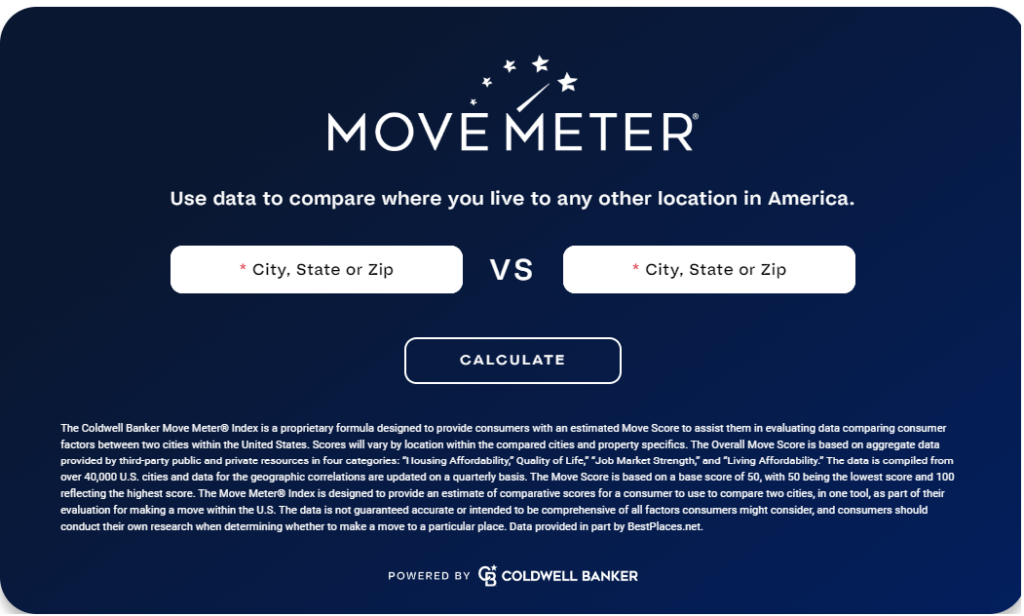
Take advantage of online tools designed to simplify the relocation process. The Move Meter is an excellent resource for comparing different cities based on your personalized criteria. It evaluates key factors like housing affordability, quality of life, job market strength, and living affordability, helping you make an informed decision.
Additionally, consider hiring professional relocation firms that can assist with the logistics of your move, ensuring a smoother transition. These firms often offer:
- Home Search Assistance: Working with local real estate agents to find suitable housing options.
- Temporary Housing: Arranging temporary accommodation while you search for a permanent home.
- Neighborhood Orientation: Providing information about different neighborhoods, including schools, amenities, and commuting options.
- Home Buying/Renting Support: Assisting with the home buying or renting process, including negotiations and paperwork.
- Area Tours: Offering guided tours of potential neighborhoods to help you get a feel for different areas.
Conclusion
Relocating can be a daunting process, but with careful planning and the right resources, you can find a place that meets your needs and supports your lifestyle. By considering all aspects of your move, you can ensure a smoother transition and a successful new beginning. If you have any questions or need further assistance, don’t hesitate to book a call with us. We are here to help make your relocation as seamless as possible!